
Thank you for looking at our blog site. After discussions with members we have agreed that members will not continue to post individual blogs. However, we are leaving up the previous blogs which may still be of historical interest, and the site will remain available for future posts should the Group decide that we want to comment collectively on developments in the sector.
What can we look forward to in 2021?
This blog is taken from a review undertaken for Bournemouth University and reflects the author’s personal views.
This is the time of year when we all like to reflect on the year just gone (although this time most of us will agree that we’re glad it is over) and look forward to the year ahead. At BU my colleague Sarah and I try to do a horizon scan every few months.
Although most of the year has been taken up by managing and responding to the pandemic, and fitting in as much normal and useful activity around it as possible, the end of the year has been marked by a surprising amount of HE policy activity. So it looks like next year will be a big one.
Of course, the huge global challenges are still huge global challenges. Inequality has been exacerbated by the pandemic and racial inequality in particular has rightly become a focus. We are all much more aware of mental health and wellbeing challenges, as they affect us and those around us. Environmental issues have also been highlighted, as the skies and roads cleared and then became polluted again. These issues affect HE and HE people.
But putting those to one side for a minute, here are some thoughts on HE policy in 2021.
Read the full post … “What can we look forward to in 2021?”Reflections one year on as a Policy Advisor
This blog is by James Coe, Senior Policy Advisor at the University of Liverpool.
The 10th anniversary of the Lighthouse Policy Group coincides with my first anniversary as senior policy advisor, at the University of Liverpool. As we look back on the work of the Group I’ve been reflecting on what a policy advisor is, what they do, and what they might have to do over the next year.
A “policy advisor” is a very pliable role. We occupy a space which sits somewhere between special advisors, public affairs professionals, and projects managers. It comes in different forms in different institutions even for people with the same job titles. Some roles are focussed on influencing political institutions, some work across media and communications, some focus on internal projects, and others look more externally on the changing higher education landscape.
Read the full post … “Reflections one year on as a Policy Advisor”Reflections on the role of university policy adviser
Jane is writing in her personal capacity.
Happy birthday to the Lighthouse Policy Group! When I started in my policy role at Bournemouth University in early 2016 I was thrilled to discover that there was a group of people in similarly strange roles across the sector, who were willing to share stories, insights sympathy and understanding. Since then we have met in a number of times, and shared a lot of laughter and a lot of good sense. Of late we have started meeting virtually, of course, but the good sense and the warmth and understanding are still there.
Read the full post … “Reflections on the role of university policy adviser”‘10 years of wonkery’ : shining a policy light as the Lighthouse Policy Group
A joint post by Harriet Dunbar-Morris, University of Portsmouth and Jonathan Woodhead, Birkbeck, University of London. We’ve also had another version of this post, aimed at the Wonkhe readership, published by Wonkhe.
10 years ago a group of HE policy people gathered at the University of Plymouth for the inaugural Lighthouse Policy Group meeting. Rather tongue in cheek, the group is so named, as, in the spirit of how the Russell Group and the 1994 Group came to be named, the Plymouth Hoe lighthouse is a prominent feature of Plymouth city centre, and because we shed light on Higher Education policy and the work of policy officers.
We have grown from eight members in 2010 to around 50 members today. It was quite a new trend when our group was born, for Vice-Chancellors to have policy advisers and to grow the role of what are also now known as ‘Executive Officer’, ‘Strategic Advisor’ or even ‘Chief of Staff’.
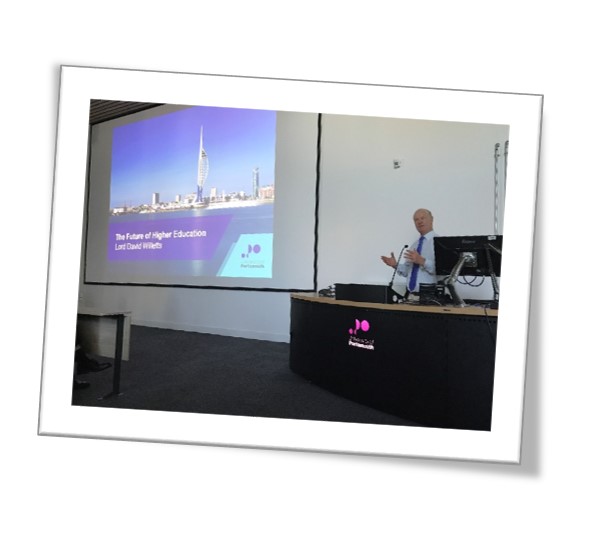
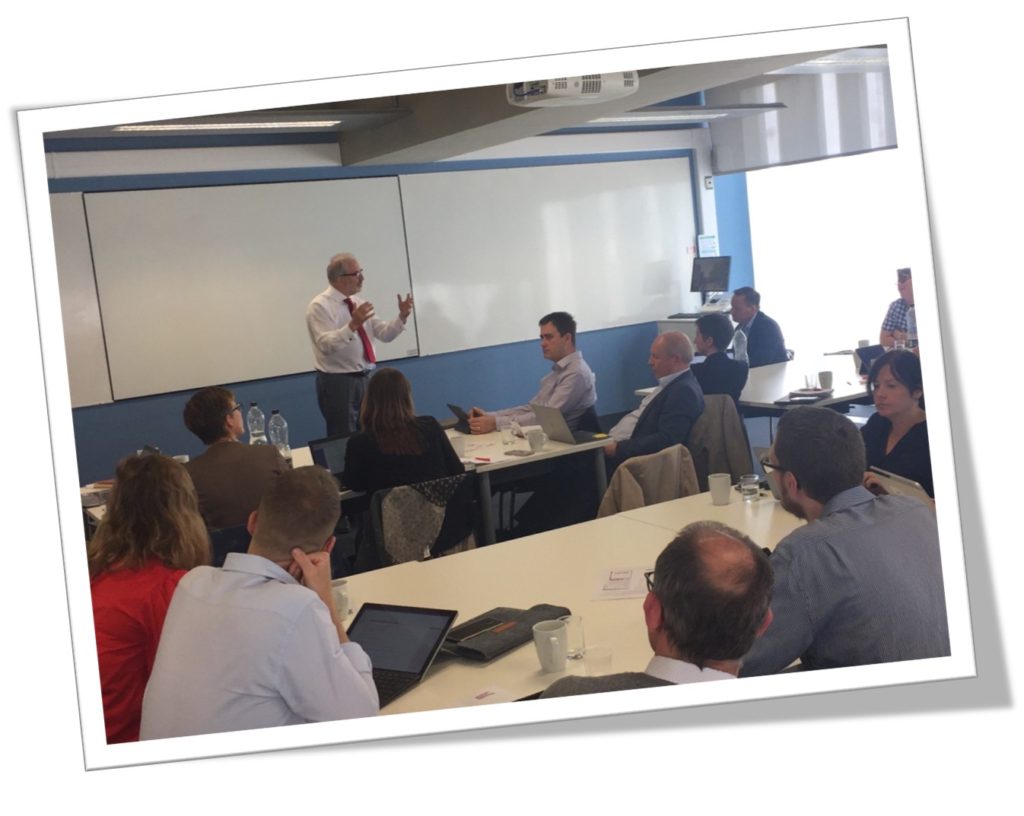
Over the years our meetings, which are held at different university campuses, have primarily been for networking and peer support. However, they have attracted a number of speakers from think-tanks, local authority figures, academics, and even senior politicians wishing to discuss and debate ideas with the group – these include Lord Kerslake, Lord Willetts, Lord Bassam, Nick Hillman, Rachel Wolf, and Andy Westwood to name just a few. One of our strengths has been to include policy people from across the sector, regardless of mission group or geography. At one point we had members attending from private HEIs, and we are pleased to say colleagues from Northern Ireland have taken an increasing interest in the group.
Those with a long memory may remember when Mark Leach, now of Wonkhe, wrote a piece in 2012 about the rise of the ‘policy wonk’ for the Times Higher which features profiles of past and current members: www.timeshighereducation.com/features/who-let-them-in/418697.article.
Not a lot has changed since the debut of our group, except there are a lot more of us, and policy changes so rapidly that in some institutions the ‘policy wonk’ is no longer ‘a team of one’, as was the case and one of the reasons for the birth of the group. Founding members found it helpful to share their experience across institutions as they often had no-one within their institution to talk policy with. Now there’s a veritable army of policy wonks in the sector.
The Lighthouse Policy Group too has evolved. It continues to provide that support network to its members, the mailing list buzzes whenever there is a new announcement, and it continues to provide opportunities to hear from external speakers on a range of relevant topics.
In that time we have also forged links with North American institutions (where this role is much more prevalent) through the NAPAHE network. In the past few years Lighthouse Group members have attended their Annual Conference in Washington DC and Philadelphia. Other Lighthouse Group members have presented closer to home at the AUA Conference and HESPA in previous years too.
10 years is a long time in policy terms. What kinds of policy have we been shining a light on over those 10 years? What has been keeping our VCs awake at night? (A question we ask of the hosting VC at our meetings by the way).
- Funding and fees – lots of proposed changes to funding and fees, consultations, responding to Spending Reviews, the Browne Review, HE White Paper, the Augar Report, …
- Teaching – more consultations, shifting goalposts, Teaching Excellence Framework (TEF), Graduate Outcomes, LEO, National Student Survey, league tables, …
- Research – Research Excellence Framework (REF) and Knowledge Exchange Framework (KEF), …
- Links with business – more consultations, liaise with CBI and other bodies, Wilson Review, the notion of a ‘Civic University’, …
- Links with government – more consultations, ministerial letters, liaise with MPs, Ministers, stakeholders, student voting, …
- Links with organisations – more consultations, bonfire of the quangos, financial implications of membership fees, …
- Not forgetting of course the current COVID-19 pandemic and Brexit too.
You’d be forgiven for thinking that it’s all about responding to consultations and external requirements. There certainly is a fair amount of consultation across all the areas of policy, and a constant stream of requests from government and a variety of sector bodies. But a policy wonk also undertakes a great deal of work within their institution too, and most important of all is their privileged relationship with their VC. As their right-hand and sounding board, with a cross-institutional remit, they get involved with all sorts of key institutional initiatives.
If you are a policy wonk in an institution, and not yet a member, why not get in touch to find out more about the group: www.lighthousepolicygroup.net.
If you are thinking about a change of career and fancy a central role at the right-hand of a VC then becoming a ‘policy wonk’ might just be the right choice for you.
How our relocation helped us during lockdown
By Nick Allen, Executive Officer at the University of Northampton.
In June 2017, current and former staff of the University of Northampton “feared the university was putting too much of a focus on online lessons and hot-desking”. Fast forward three years and we are mid-pandemic. I cannot deny that we haven’t had challenges during the pandemic – 450 resident students who remained with us during lockdown across three sites being one – but the decisions taken to relocate the University from two aging campuses to purpose-built brand-new accommodation in August 2018 has helped us significantly respond to and navigate through the problems we have faced.
Read the full post … “How our relocation helped us during lockdown”Our members in the news
As well as occasionally blogging on here, our members are actively publishing elsewhere. Some recent links here.
Read the full post … “Our members in the news”Walking the line: life at the interface of universities and policy
Dr Diana Beech writes in a personal capacity about what it’s like to work in the ‘grey area’ between universities and government.
Over the course of the past decade, you could say I’ve shifted sides a few times.
Having started out as a fresh-faced PhD, then a serial post-doc, I quickly made my way into the world of policy: first by lobbying for improved conditions for researchers at the European level, and then by building up a portfolio of experience in all aspects of the domestic higher education and research agenda – from collecting evidence for a small research consultancy on open access monographs, through to focusing on labour market and skills policy for a major UK trade body.
My career path hasn’t always been simple and in fact, at times, the route I’ve taken has been far from logical. But the skills I acquired on the way ended up taking me to a place where few others get to go – and that’s right into the heart of national policymaking when I worked as Policy Adviser to the last three Ministers of State for Universities and Science.
Read the full post … “Walking the line: life at the interface of universities and policy”What next for HE (after the pandemic)?
This post by Jane Forster of Bournemouth University reuses material prepared for internal use and represents her own views and not those of BU.
It focusses on HE policy specifically, and therefore doesn’t address the extremely important matters that are facing all organisations at the moment, such as the equality and diversity agenda including race, gender, disability and disadvantage, the environment and sustainability, and health and wellbeing, with mental health as well as the many issues arising from the pandemic being high on everyone’s priority list.
Having put aside those (monumental) questions, here is the blog, which seeks to set out a brief summary of government and OfS positions on a long list of HE policy matters and to look forward to the Autumn, with some trepidation.
Read the full post … “What next for HE (after the pandemic)?”Post-qualification admissions – a good thing for disadvantaged students or not?
This blog was written by Sarah Carter at Bournemouth University and was first published on the BU Research Blog as part of a series of regular policy updates for internal and external readers. These views are Sarah’s own and not the views of Bournemouth University.
Although this was written nearly a year ago, in August 2019 (when PQA was last in the headlines) we believe it is still relevant as the government look likely to restart the debate again post-pandemic.
The following blog was written for a general HE audience without specialist policy knowledge to raise awareness of factors and impact a change in system may have.
Labour reinvigorated the post-qualification admissions debate on Wednesday when they declared they would reform the HE system and scrap predicted grades to implement a ‘new fairer system of post-qualification admissions’. Talk of post-qualification admissions (PQA) has been around for a long while, (Schwartz review, 2003; UCAS 2011), and quite recently the UCU have been pushing for PQA because they believe it penalises disadvantaged students. The claim is that capable disadvantaged students are penalised because they may receive under-predicted grades than their stronger, higher grade performance in their final exams. Lower predicted grades restrict their ability to apply to and secure a university place at the most competitive institutions. A focus on ensuring access for disadvantaged students to the highest tariff institutions was championed by Sam Gymiah, (HE Minister of 10 months, two Ministers ago) who pressurised Oxbridge to radically improve the number of disadvantaged students they accept and challenged students to think big and trade up to the most competitive institutions (claiming it leads to higher employability returns). So it is interesting to see a Conservative and Labour policy align, even if they have different solutions.
Read the full post … “Post-qualification admissions – a good thing for disadvantaged students or not?”